⌂
Resistor Technologies U.S.
Resistor Labs
Where the machines learn to think — and organize.
Frontier AI visualization. Distributed agent coordination. Built from scratch.
Neural Cortex
The brain, visualized. Every node is a thought. Every connection is a synapse. This is what distributed AI reasoning looks like when you can see it.
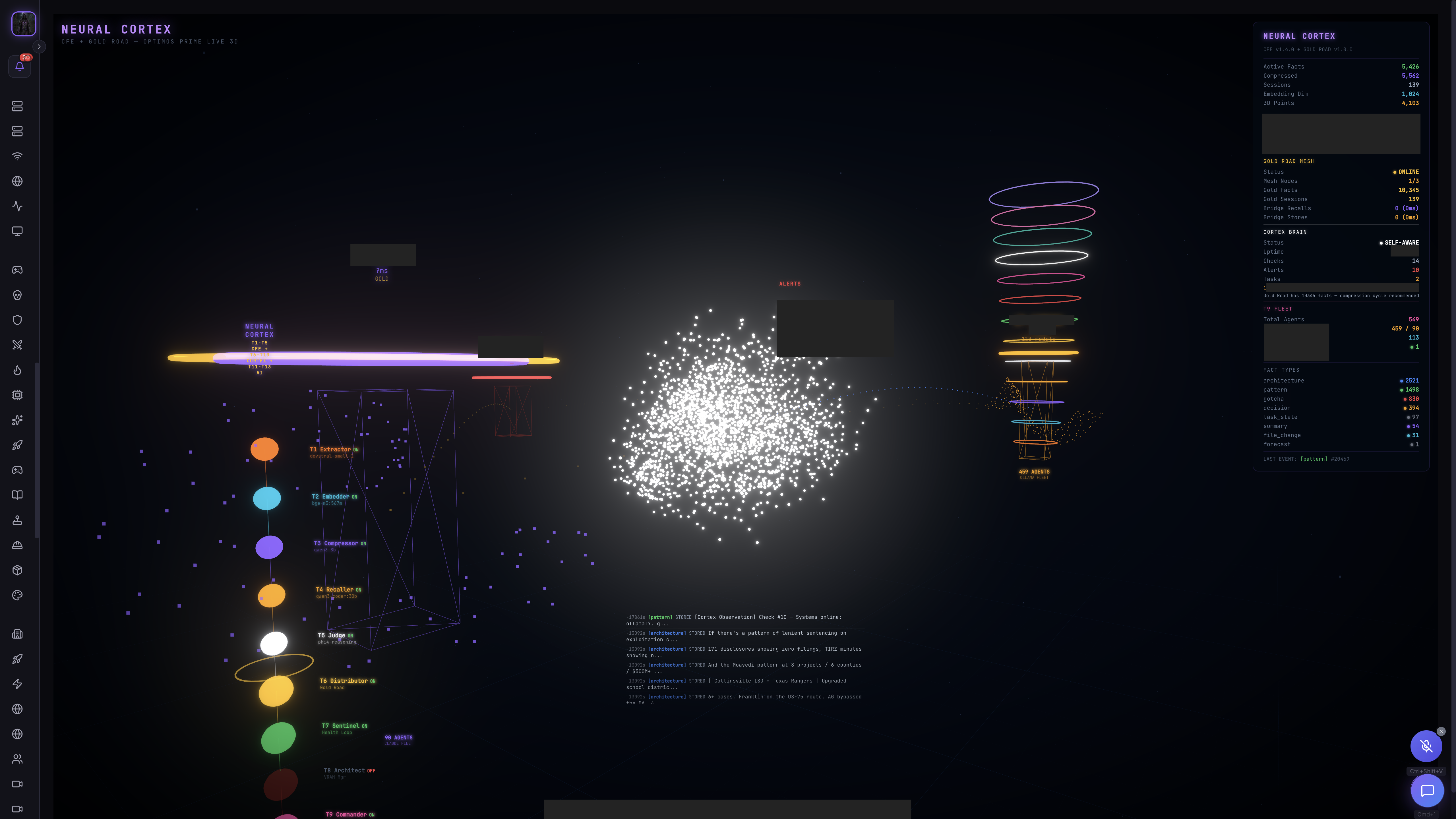
Neural Cortex closeup — particle cloud inference with dual model helix stacks and subsystem nodes
Neural Cortex is a real-time 3D visualization of the entire Resistor AI nervous system. The central particle cloud represents active inference — hundreds of glowing nodes firing as the system reasons. Each colored sphere on the left maps to a subsystem: Watchdog, Feedback Loop, Task Queue, Model Router, Journal, Consensus Engine, Self Model, and more. The DNA-helix structures on the right show live model stacks — 87+ models loaded across the distributed mesh, spinning in formation.
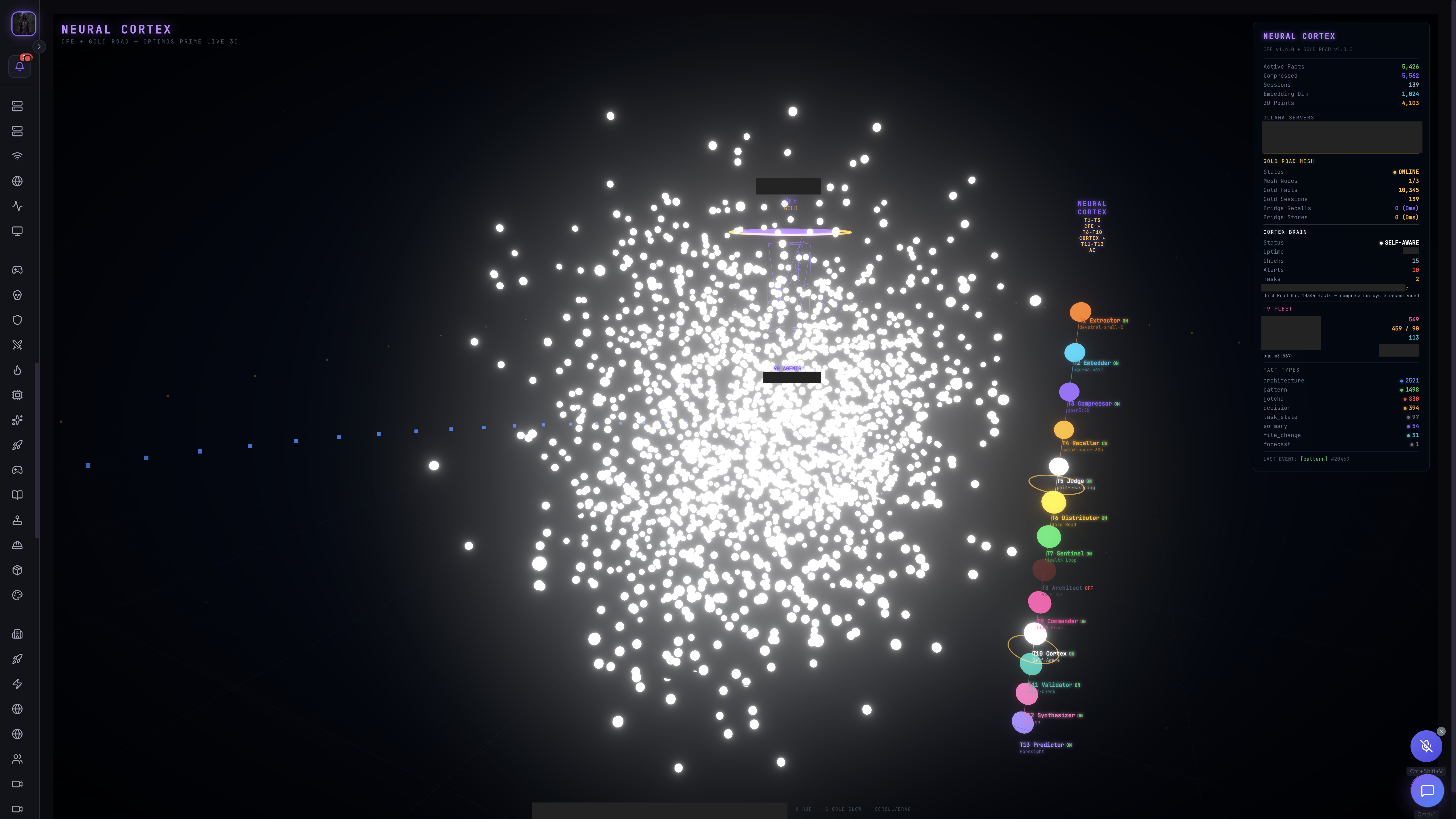
Neural Cortex full view — particle cloud inference, subsystem spheres, model helix stacks, live status panels
Live Particle Cloud
Hundreds of nodes representing active reasoning. Watch the system think in real time as inference fires across the mesh.
12 Subsystem Spheres
Each colored sphere maps to a Cortex subsystem — Watchdog, Feedback, Router, Journal, Consensus, Self Model, and more.
Model Helix Stacks
DNA-style rotating helices showing 87+ models loaded across the distributed mesh. Color-coded by capability tier.
617 Agent Nodes
Every agent in the Resistor ecosystem is a visible, trackable point of light. From file watchers to market analysts.
Fleet Academy
Agent coordination at scale. Every dot is an agent. Every zone is a mission cluster. This is how 617 agents organize themselves without central command.
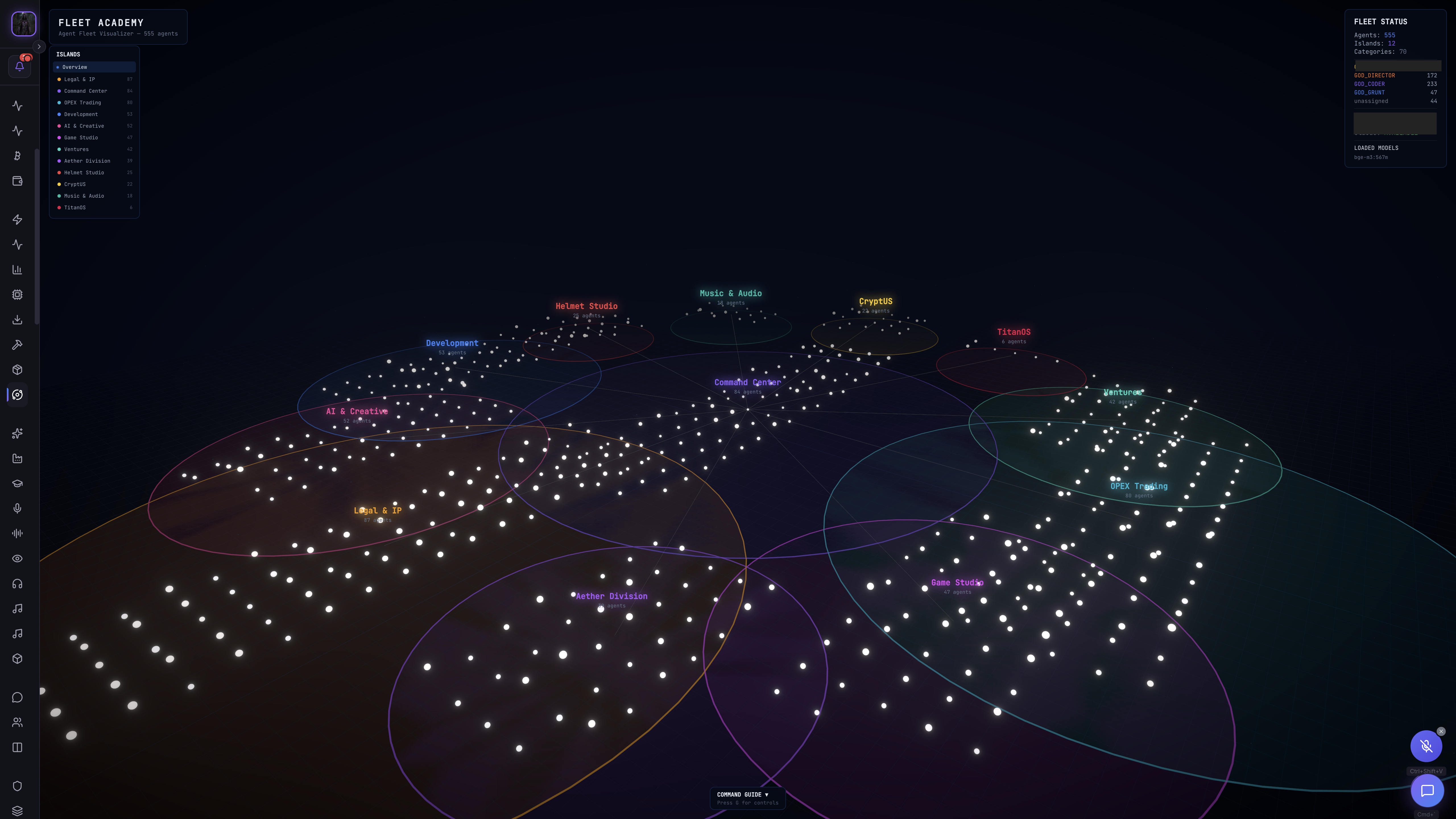
Fleet Academy overhead — color-coded mission clusters with agent formations
Fleet Academy is a distributed agent coordination system visualized as a living battlefield. Agents self-organize into colored zones based on their mission type — Sentinel Cluster for security, Media & Audio for content, Market Operations for trading, and more. Each glowing dot is a real agent running real tasks. The translucent boundary circles show cluster influence radius. Agents migrate between zones as priorities shift. No human orchestration required.
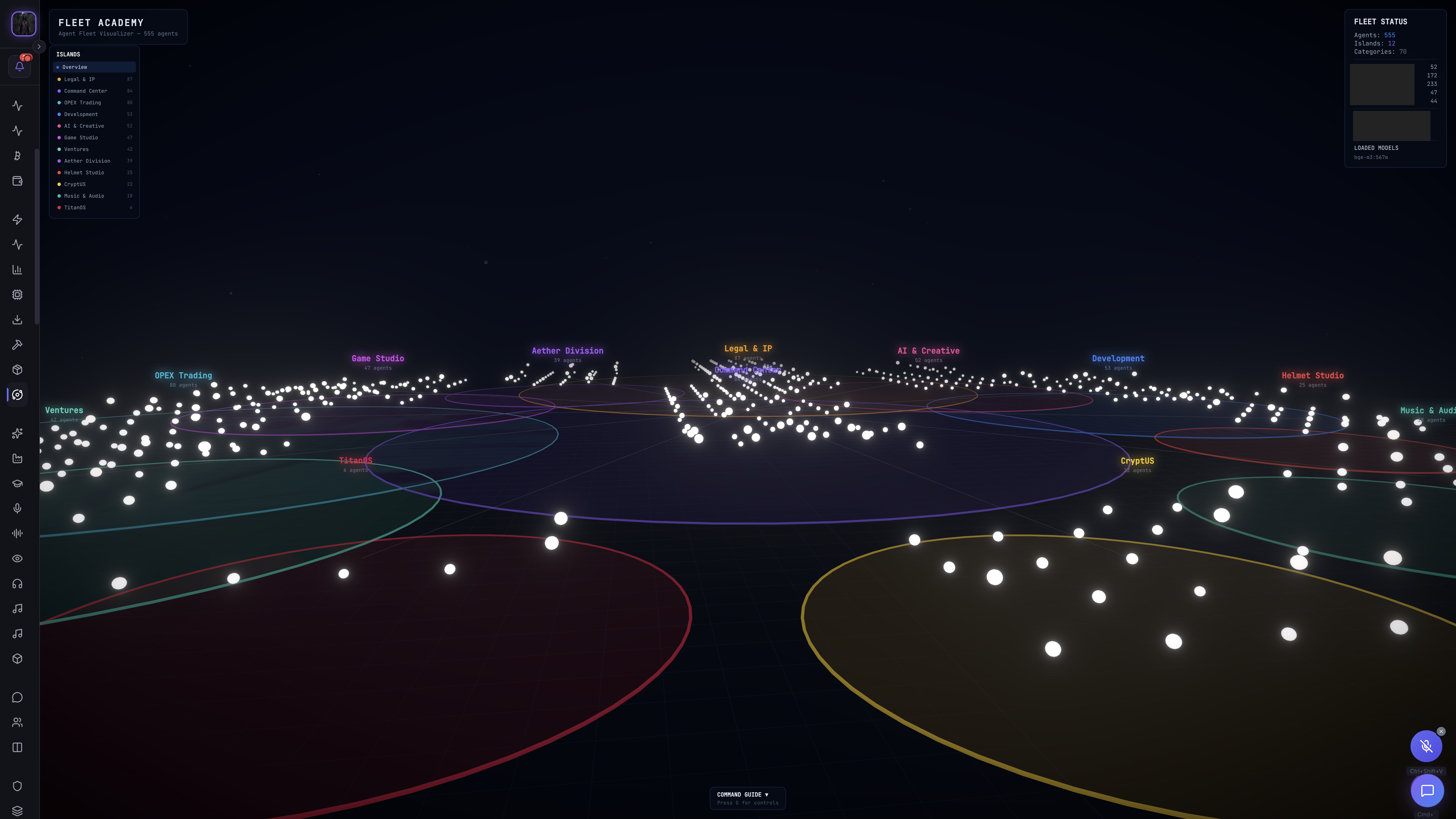
Wide formation — full fleet deployed across mission clusters with boundary zones
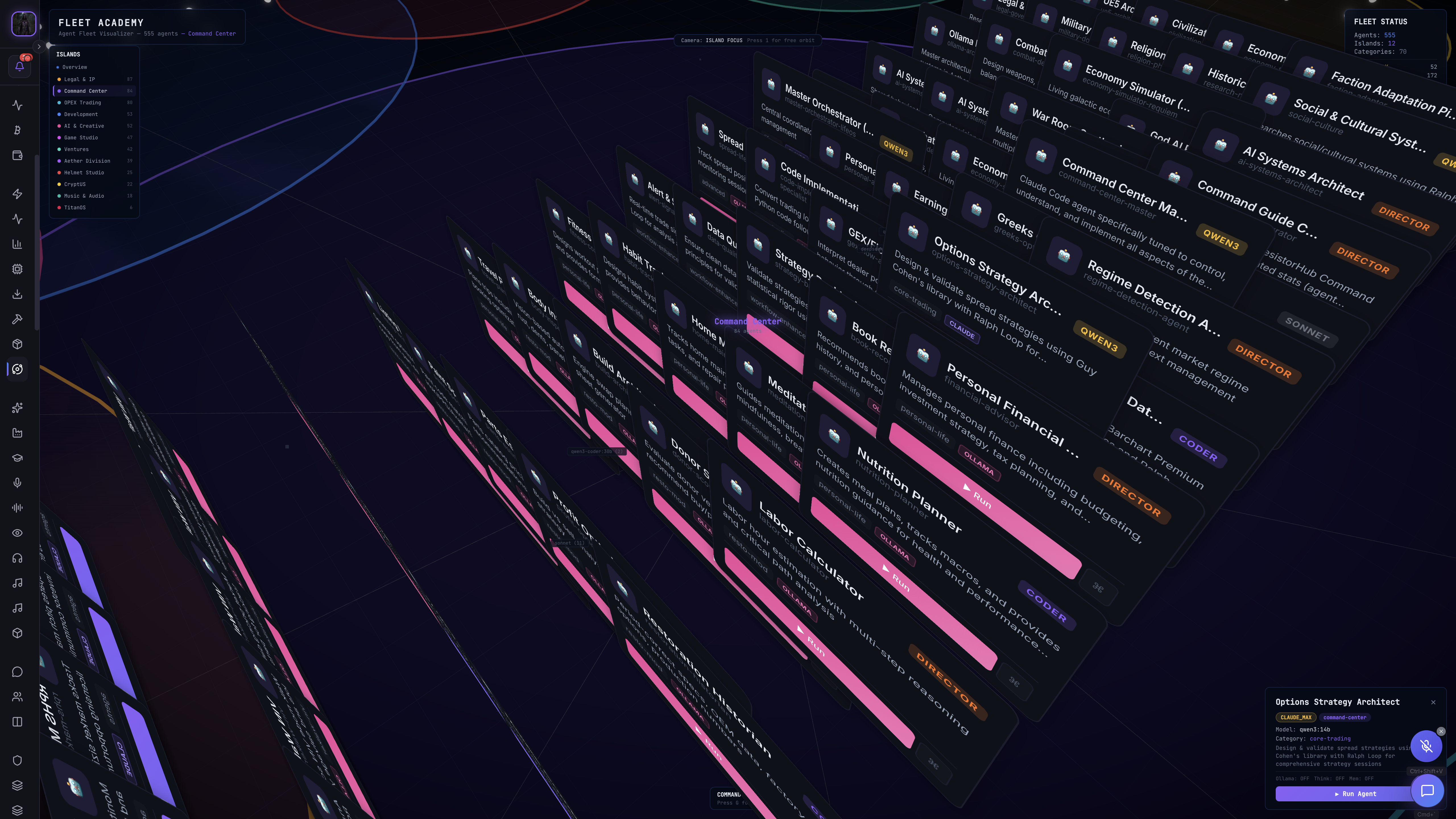
Agent cards up close — Command Center models, use cases, and capability tags rendered in 3D perspective
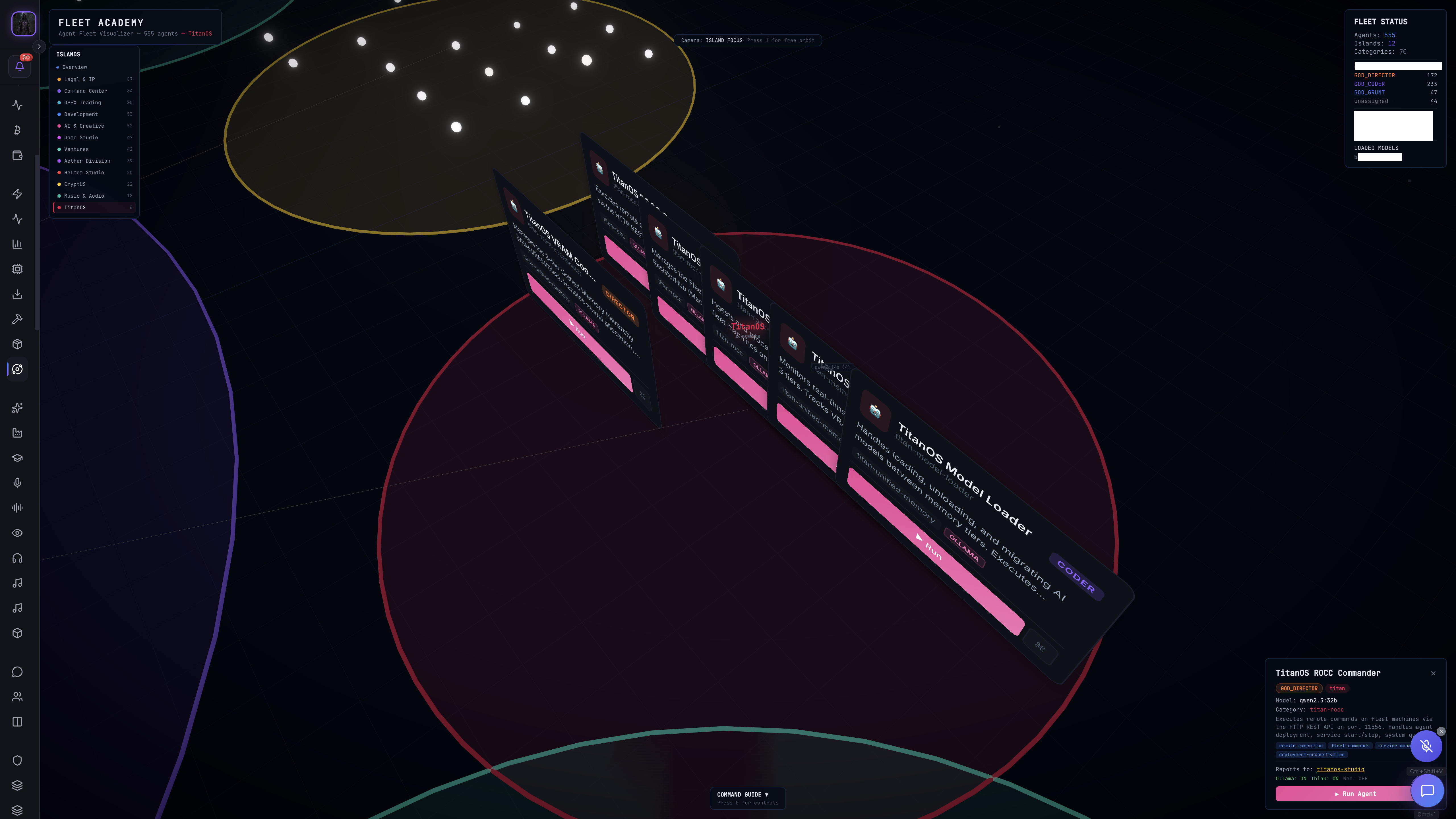
TitanOS cluster detail — individual agent cards with mission assignments floating above cluster boundaries
Self-Organizing Clusters
Agents form mission clusters autonomously. No manual assignment. They find their team based on capability and current need.
Color-Coded Zones
Each zone has a distinct color and boundary. Sentinel (teal), Market Ops (amber), Media (pink), Research (purple), and more.
Live Migration
Agents dynamically migrate between clusters as priorities shift. A security event pulls agents from idle zones into Sentinel.
Fleet Status Panel
Real-time readout of cluster health, agent counts, active missions, and cross-cluster communication metrics.
What you see here is a small sampling of the Resistor Command Center’s capabilities — 62 pages, 617 agents, 141 components, and 27 services running across a distributed mesh. This is just the surface.
Robotics Studio
Design a robot. Wire its nervous system. Simulate its reflexes. Deploy its fleet. Same distributed mesh protocol — from fingers to factories.
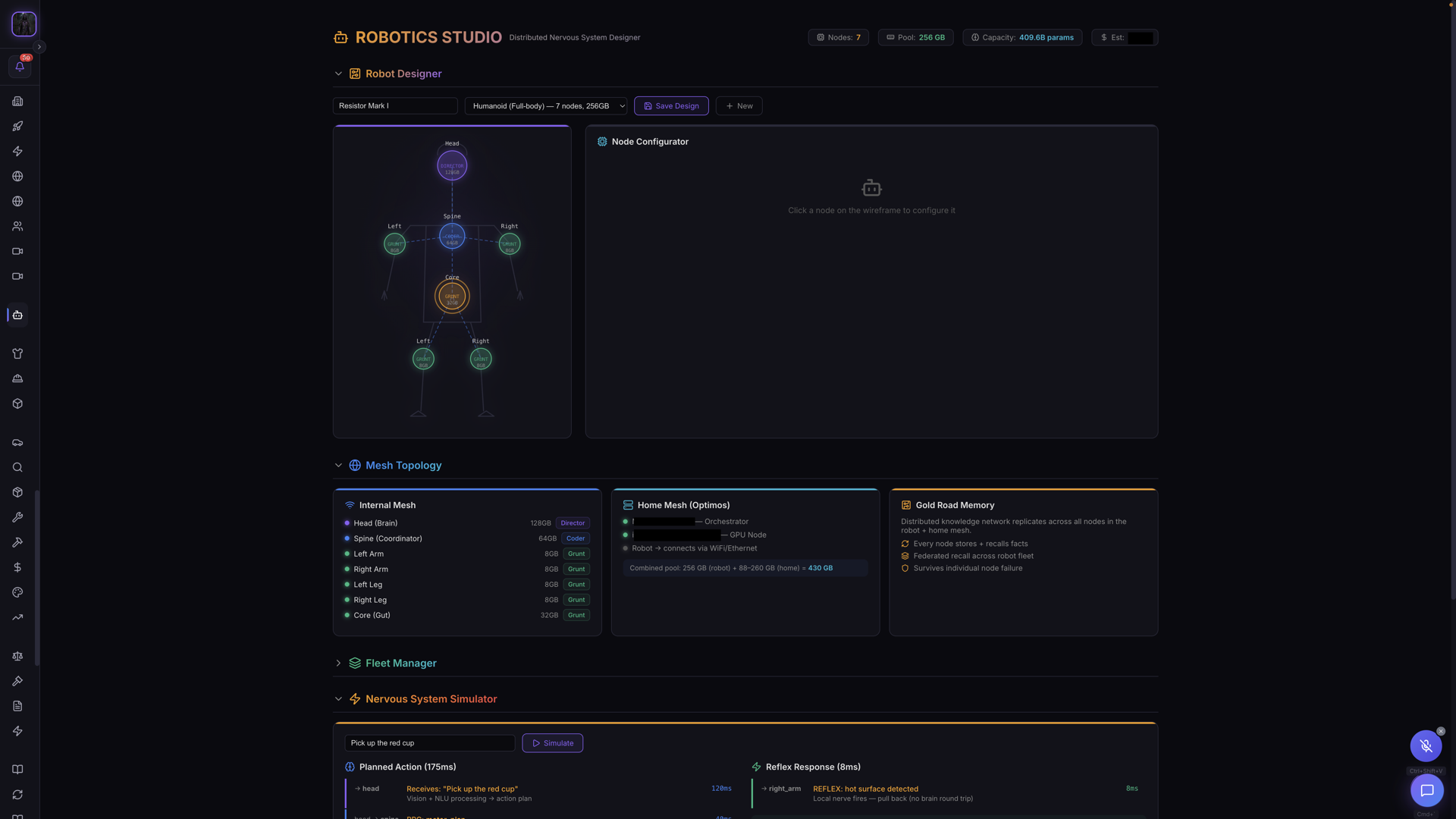
Robot Designer — interactive humanoid wireframe with node configurator, mesh topology (Internal Mesh, Home Mesh via Colossus, Gold Road Memory), and fleet manager
Robotics Studio extends the Colossus Prime distributed inference mesh into physical hardware. Design a robot from a wireframe, assign compute nodes to each body region (Head, Spine, Arms, Legs, Core), and watch the mesh topology map itself — Internal Mesh for onboard processing, Home Mesh connecting back to Colossus for heavy reasoning, and Gold Road Memory for persistent knowledge that survives individual node failures. The same protocol that coordinates 617 software agents now coordinates actuators, pressure sensors, and motor controllers.
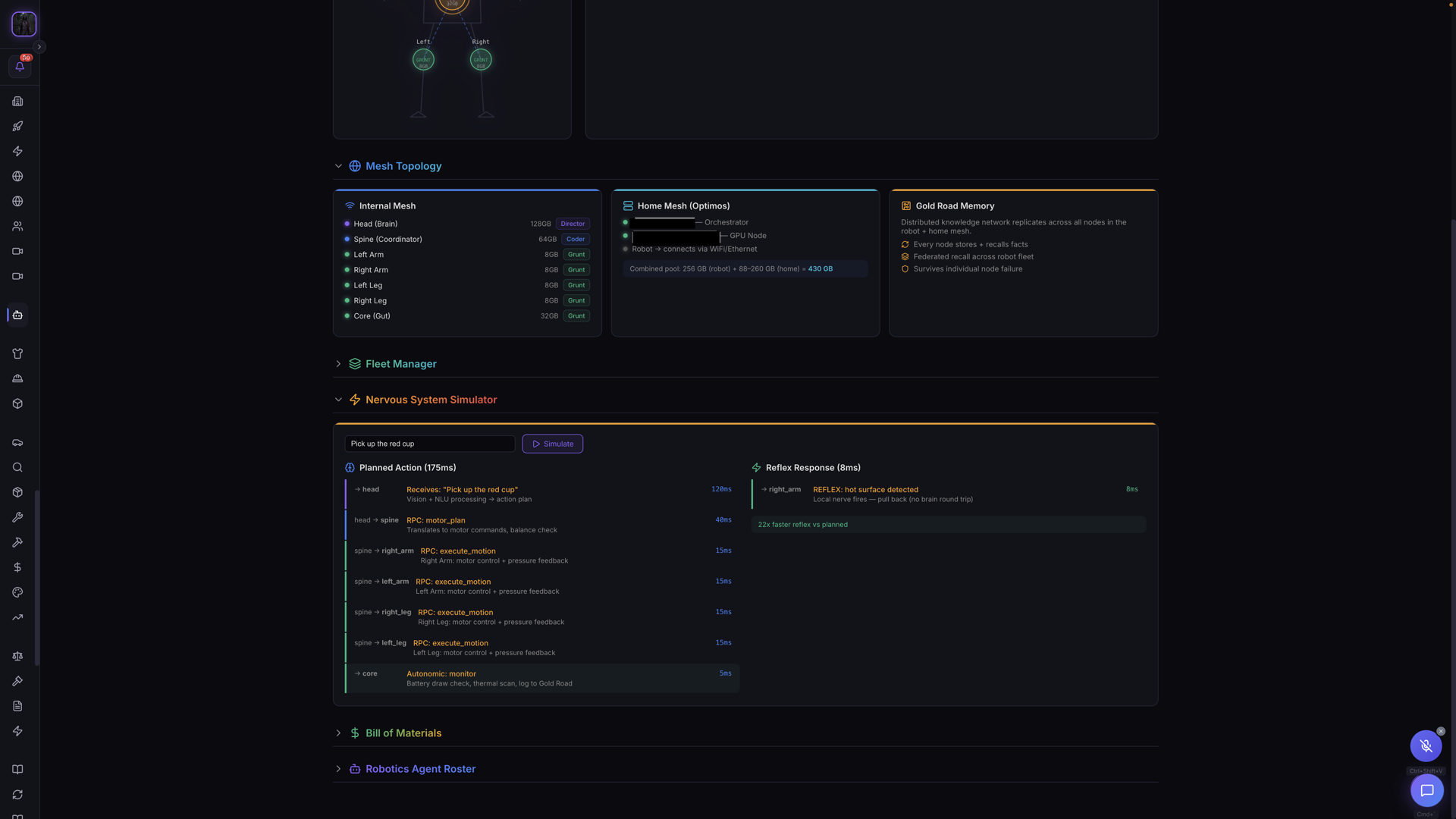
Nervous System Simulator — real-time action planning (175ms), reflex response (8ms), RPC motor execution chains, and autonomous maintenance cycles
The Nervous System Simulator shows exactly how a robot thinks. A planned action like “Pick up the red cup” decomposes into vision, NLU processing, and motor planning in 175ms. Reflex responses fire in 8ms — a hot surface triggers an arm pull-back via local nerve fibers, no brain round-trip required. Below the simulation, RPC calls cascade through the mesh: spine dispatches to limbs, each joint reports pressure feedback, and the autonomic layer handles battery, thermal monitoring, and self-diagnostics without being asked.
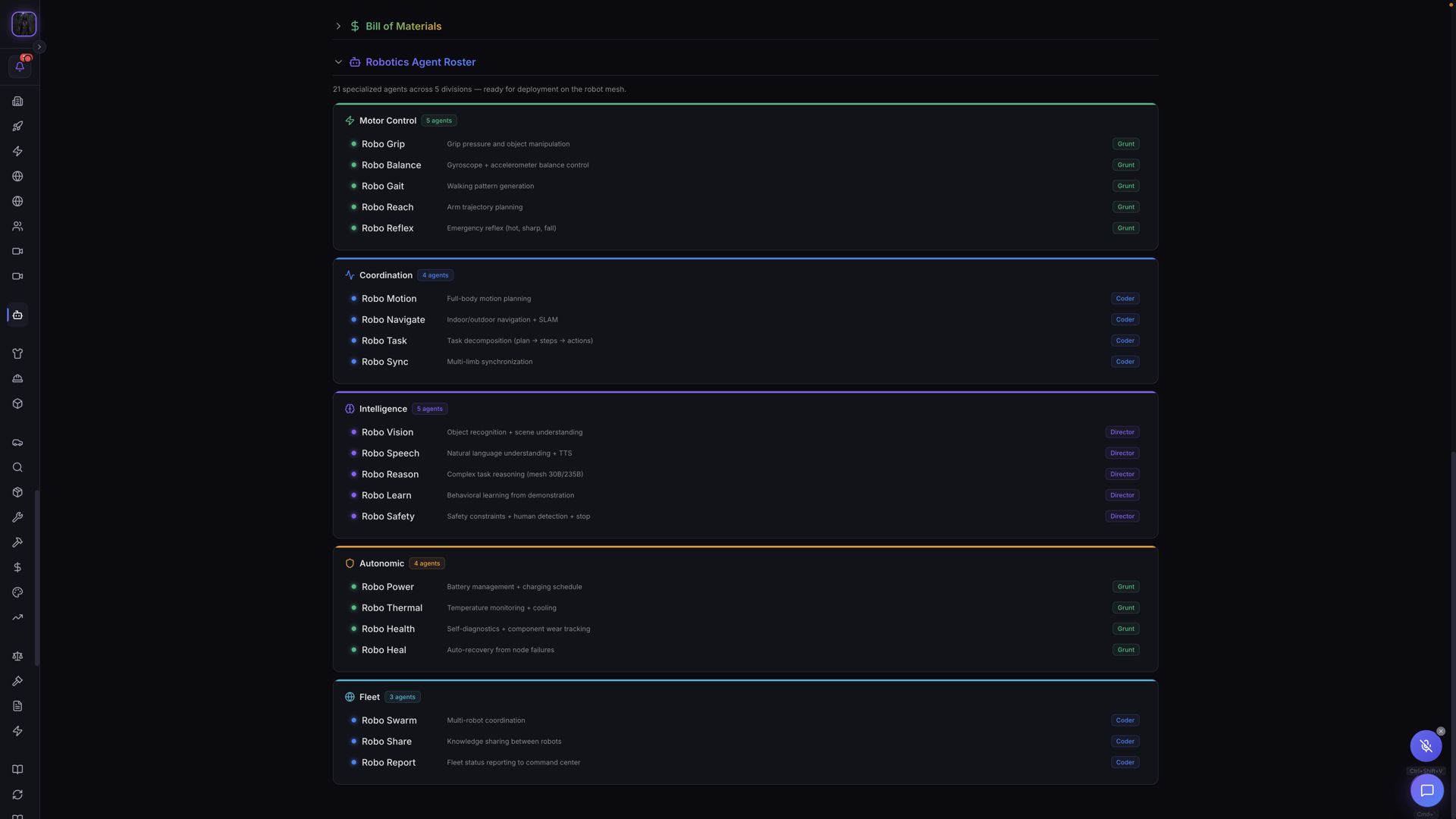
Robotics Agent Roster — 21 specialized agents across 5 divisions, ready for deployment on the robot mesh
5 Agent Divisions
Motor Control (grip, balance, gait, reach, reflex), Coordination (motion, navigation, task decomposition, sync), Intelligence (vision, speech, reason, learn, safety), Autonomic (power, thermal, health, heal), and Fleet (swarm, share, report).
Distributed Nervous System
Head runs the brain (128GB). Spine coordinates (64GB). Limbs run local grunt nodes (8GB each). Core handles gut-level autonomics (32GB). Same mesh, biological hierarchy.
8ms Reflex Arc
Local nerve fibers handle emergency reflexes without brain round-trip. Hot surface, sharp edge, fall detection — the limb reacts before the head even knows.
Gold Road Integration
Every robot stores memories and recalls facts through the same federated knowledge network. Swap a node, the knowledge persists. Build a fleet, they all share what they learn.
Brought to you by The Resistance
The American Dream
Built from scratch on consumer hardware. No venture capital. No permission. No cloud dependency. Just two machines, 88 GB of pooled memory, and the belief that the future of AI belongs to everyone.
← Resistor Technologies Home